
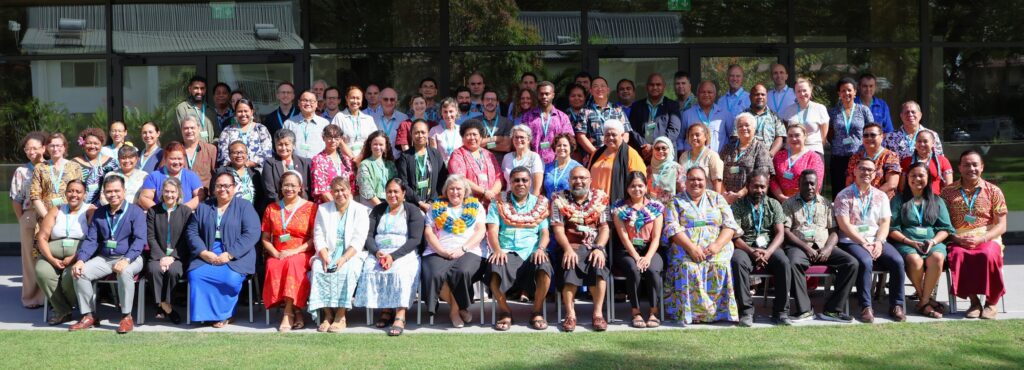
In July 2025, Alastair Donachie, Research Fellow with the IDIE team, attended the Pacific Public Health Surveillance Network (PPHSN) Regional Meeting in Nadi, Fiji. This marked a significant milestone, with IDIE participating for the first time as a newly recognised allied member of the PPHSN.
Coordinated by the Pacific Community (SPC), the meeting brought together public health leaders, technical experts, and partners from across Pacific Island Countries and Territories (PICTs), including ministries of health, regional organisations, and fellow allied members. It served as a vital platform to discuss, finalise, and endorse the PPHSN Strategic Framework 2026–2035, setting a clear direction for collective regional action over the next decade.
A strong focus was placed on strengthening collaborative and multisectoral approaches to health security through shared learning, integrated disease surveillance, and coordinated preparedness and response. Proposed new activities for each of the PPHSN’s service arms were discussed, including the recent endorsement of the Pacific Vector Network (PVN) as a new arm to support vector monitoring and surveillance. These developments reflect the network’s evolving scope and ongoing efforts to address complex and emerging health threats through regional coordination.
Key sessions addressed priority areas such as strengthening disease surveillance systems, building public health workforce capacity, and integrating One Health approaches to tackle zoonotic diseases and antimicrobial resistance (AMR). The increasing health impacts of climate change were also a major theme, particularly its role in disease emergence and the need to build resilient and adaptive health systems across the region. Countries shared valuable lessons learned and best practices in the prevention and management of arboviral diseases, HIV, other sexually transmitted infections (STIs), and other public health priorities.
The final day of the meeting was dedicated to typhoid, with a focus on raising awareness of its burden in PICTs and developing a coordinated five-year regional roadmap. Discussions covered strengthening surveillance systems, expanding vaccine rollout, updating treatment protocols to respond to AMR, and improving cross-sector coordination including with water, sanitation and hygiene (WASH), risk communication, and community engagement. These discussions highlighted the critical need for partnership and sustained regional leadership to improve typhoid control and health outcomes.
We are proud to have led the first-ever evaluation of the PPHSN in 2023, working closely with the University of Queensland, Griffith University and regional partners including the SPC. Our work helped shape the new strategic direction of the network, and we look forward to supporting its implementation through continued collaboration across the region.
We also look forward to strengthening these partnerships and supporting ongoing efforts to enhance health security and resilience across the Pacific region.