On Wednesday, 8 April 2026, the Infectious Diseases, Immunisation & Emergencies (IDIE) team came together for a full-day planning session at the Sydney Institute of Marine Science in Chowder Bay. Bringing together IDIE members, including our lead Professor Meru Sheel, the day was designed with a clear purpose: to strengthen how we work together, align on priorities and outputs, and create space for learning, reflection, and connection across our growing team.
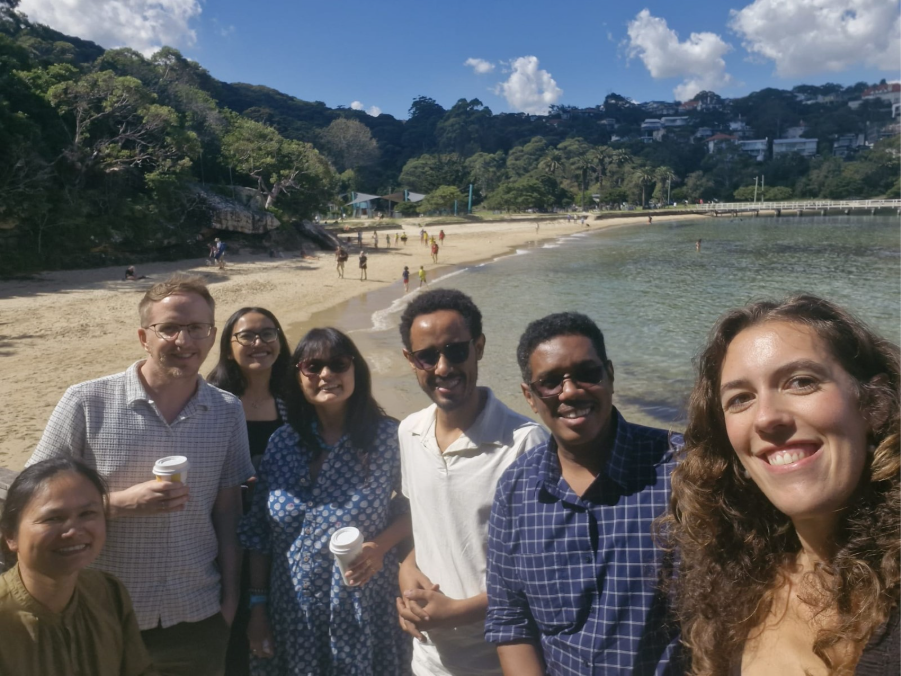
We began with a simple but grounding exercise, where each of us shared one word to describe how we were feeling about the day. It was a small moment, but it set the tone for the day – open and reflective. From there, we turned to a shared question: what do we want to get out of this time together? The answers varied, but converged around a common theme – clarity, alignment, inspiration, and the opportunity to think collectively.
As the day unfolded, we stepped back from our day-to-day work to reflect on what we are doing and where we are heading. Across Lao PDR, Fiji, and the Philippines, IDIE’s work spans a range of areas – from immunisation for children with disability and acute febrile illness (AFI) surveillance strengthening in Fiji, to electronic immunisation registries (EIR) in Lao PDR. We are also working to strengthen measles surveillance and outbreak response in Lao PDR and the Philippines using WHO collaborative surveillance framework, alongside efforts to improve immunisation access among ethnic minority communities (Hmong populations) in Lao PDR. While diverse in focus, these projects are connected by a shared purpose: to generate meaningful evidence that strengthens how we prevent, detect, and respond to outbreaks.
This diversity in our work is closely linked to the diversity of our team. IDIE brings together expertise across epidemiology, mixed methods research, modelling, social science, program implementation, statistics, and health equity. Our team spans a wide range of cultural and professional backgrounds, with members from countries including India, Australia, Fiji, China, Indonesia, Lao PDR, Sudan, and Ethiopia. We work across multiple languages and contexts, bringing perspectives that reflect the communities we serve. This diversity is not just a strength but it also shapes how we approach complex public health challenges in low- and middle-income countries (LMICs)
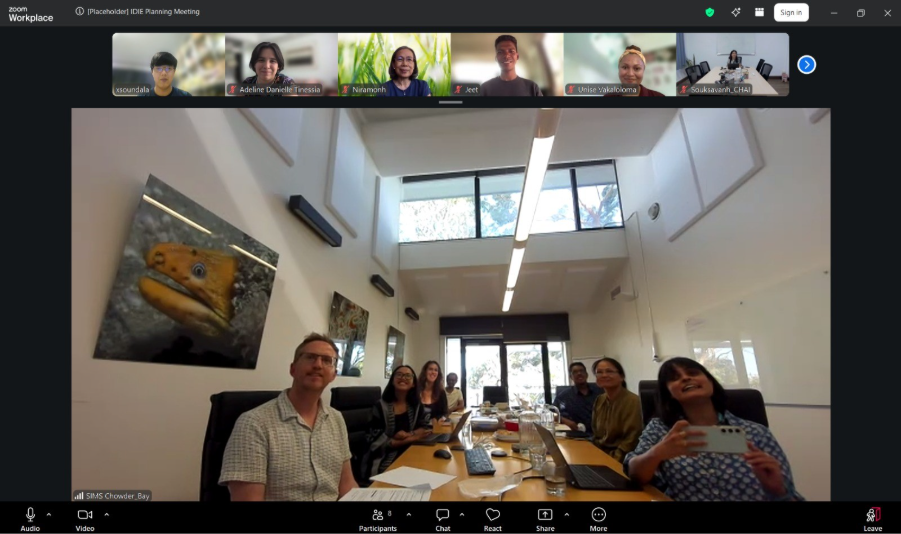
Beyond the planning itself, the day was also an opportunity to bring together IDIE members, including our global team, which created a valuable moment to strengthen relationships and connect across regions. The discussion on ways of working highlighted what is already working well in IDIE – strong collaboration, regular communication, and a shared commitment to impact- while also surfacing areas where we can be more intentional. In particular, we identified opportunities to improve visibility across projects, strengthen coordination, and better structure how we develop outputs such as manuscripts and grant applications. There was also strong interest in learning from each other’s expertise and building a more deliberate culture of knowledge sharing within the team.
For me personally, the Planning Day was also a valuable opportunity to observe how a multidisciplinary research team reflects, plans, and works together beyond the day-to-day delivery of projects. Coming from a background largely focused on program implementation in global health, this is my first experience working within an academic research team environment. It was insightful to see how discussions around strategy, collaboration, publications, grants, and long-term research direction are approached collectively and intentionally. The day highlighted that impactful research is not only shaped by technical expertise, but also by strong teamwork, reflection, and shared purpose.
Another key highlight of the day was the philanthropy session, delivered by Amanda Craze and Juliet Aldridge from the University of Sydney’s Advancement Portfolio (TAP). Their session encouraged IDIE members to explore what it means to build relationships, tell compelling stories, and connect our work to what motivates donors. It reinforced that strong research alone is not enough; clarity of purpose, partnerships, and the ability to communicate impact are equally critical.
The day concluded with a clear sense of direction and momentum. More broadly, the planning day reaffirmed the value of stepping back to think together – not just about what we do, but how and why we do it. As we move forward, the challenge, and the opportunity, is to translate this shared thinking into meaningful action.
– Temi Risva, Research Assistant